

Handling abrasive and corrosive fluids requires pumping equipment that can withstand both mechanical wear and chemical attack. Fluids containing suspended solids, aggressive chemicals or high concentrations of process additives can place considerable demands on pumps and their internal components. Selecting the right equipment involves more than checking flow capacity. Fluid properties, particle concentration, temperature, pressure, material compatibility and operating conditions all influence long-term performance. A properly selected pumping system can reduce premature component failure while supporting reliable fluid transfer. Understanding these factors helps process industries choose equipment suited to challenging applications and demanding operating environments.
Understanding AODD Pump Technology
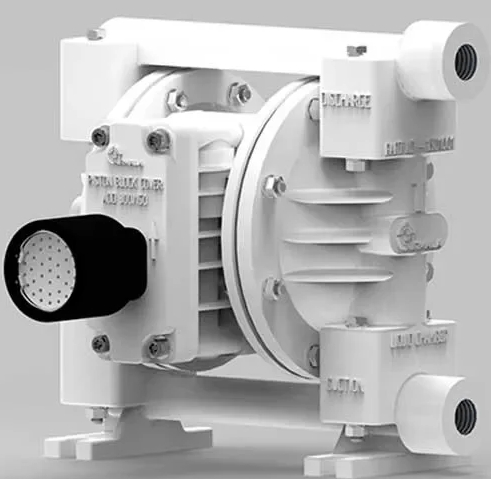
An AODD pump operates using compressed air to move fluid through two diaphragm chambers. The air distribution mechanism alternates the movement of the diaphragms, creating suction and discharge cycles that transfer liquid through the pump. The reciprocating action does create pulsating flow, which should be considered when designing connected pipework and downstream equipment. An eodd pump may be considered where an electrically driven diaphragm arrangement is preferred for the application.
How the Pumping Cycle Works
During operation, compressed air moves one diaphragm while the opposite diaphragm completes its discharge or suction stroke. Check valves control the direction of fluid movement, allowing the pump to transfer liquid without a conventional rotating shaft or mechanical seal within the wetted section.
This operating principle makes the air operated double diaphragm pump suitable for a broad range of industrial fluid handling applications. The separation between the compressed-air mechanism and the process fluid also allows suitable wetted materials to be selected according to the chemical characteristics of the application.
The reciprocating action does create pulsating flow, which should be considered when designing connected pipework and downstream equipment. Where smoother discharge is required, additional flow control or pulsation management may be incorporated into the system.
Handling Abrasive Industrial Fluids
Abrasive fluids can contain sand, minerals, catalyst particles, pigments, sludge or other suspended solids. These particles can gradually wear valves, diaphragms, seats and other wetted components if the pumping equipment is not correctly selected.
Key Factors in Abrasive Service
Particle size, hardness, concentration and fluid velocity all affect the severity of abrasive wear. A small quantity of soft particles may create relatively limited wear, while hard particles at high concentration can significantly reduce component life.
An AODD pump can be configured for certain abrasive applications because the pumping mechanism does not depend on a conventional mechanical seal exposed directly to the process fluid. However, this does not mean every configuration is suitable for every slurry.
The pump body and wetted components should be selected according to the actual process conditions. Valve balls, seats and diaphragms require particular attention because they repeatedly come into contact with the process fluid.
Pipework should also be designed to minimise unnecessary restrictions and sharp changes in direction. Excessive turbulence or velocity can increase wear and affect the overall service life of the system.
Managing Corrosive and Chemically Aggressive Fluids
Corrosive fluids create a different challenge from abrasive liquids because chemical attack can gradually weaken or degrade materials. Acids, alkalis, solvents and concentrated process chemicals may damage components that are unsuitable for the application.
An air operated double diaphragm pump can be specified with different wetted materials to accommodate particular chemical environments. The correct choice depends on the chemical composition, concentration, operating temperature and duration of exposure.
Material compatibility should cover all components that come into contact with the process fluid. Selecting only the pump body material is not sufficient because diaphragms, valve seats, balls, manifolds and connection components may have different resistance characteristics.
Temperature also deserves attention. Chemical resistance can change as operating temperature rises, while some fluids become more aggressive or change viscosity under different thermal conditions.
For this reason, chemical handling applications should be evaluated using actual process data rather than broad fluid categories such as “acidic” or “corrosive”.
Selecting the Right Pump for Combined Challenges
Some process fluids are both abrasive and corrosive. Slurries used in chemical processing, mineral handling and industrial treatment can contain solid particles suspended in chemically aggressive liquids.
These applications require a balance between chemical resistance and mechanical durability. A material selected solely for corrosion resistance may not provide adequate resistance to particle wear. Similarly, a material chosen for abrasive service may not withstand the chemical environment.
An AODD pump should therefore be selected after reviewing the complete fluid profile. Important information includes:
- Fluid composition and concentration
- Solid particle size and percentage
- Specific gravity
- Viscosity
- Operating temperature
- Required flow rate
- Discharge pressure
- Available compressed-air pressure
- Required operating hours
Pump size should be based on actual process requirements rather than simply matching the pipeline diameter. Oversizing may increase air consumption and operating costs, while undersizing can prevent the system from achieving the required process capacity.
Installation, Maintenance and Operating Considerations
- Size the suction line correctly: Avoid long runs, undersized pipes and unnecessary fittings that can increase resistance and affect pump performance.
- Check the discharge system: Ensure valves, fittings and pipe materials suit the required pressure, flow and fluid properties.
- Consider pulsation: An air operated double diaphragm pump produces reciprocating flow, so pulsation control may be required for sensitive instruments or downstream equipment.
- Inspect pump components: Check diaphragms, valves and seats regularly for wear, cracking, swelling or chemical degradation.
- Match maintenance to the application: Abrasive or corrosive fluids may require more frequent inspections.
- Maintain air quality: Clean, dry and properly regulated compressed air can support reliable pneumatic pump operation.
Advantages of Pneumatic Diaphragm Pumping in Process Plants
An AODD pump can suit demanding industrial environments where compressed air is available. It can offer self-priming capability and flexible flow control without a conventional electrical drive. Its suitability for corrosive and abrasive fluids makes it useful for various process applications. However, selection should consider the complete process duty, including fluid properties, discharge pressure, pipe resistance and required flow. An AODD pump can suit demanding industrial environments where compressed air is available. An eodd pump can provide an alternative where electric drive operation is more suitable for the process.
Conclusion
Reliable handling of abrasive and corrosive fluids depends on selecting equipment that matches the physical and chemical characteristics of the process. Particle concentration, fluid viscosity, chemical compatibility, temperature, flow rate and pressure all influence pump selection and service life. Correct materials, suitable pipework and regular inspection are equally important for maintaining dependable operation. Pneumatic diaphragm technology can provide useful flexibility for demanding industrial transfer duties when properly specified. A complete engineering assessment before installation helps ensure that the pumping system is capable of meeting process requirements while limiting avoidable wear, chemical degradation and maintenance problems.